Boundaries That Hold Under Pressure
Fences in Ballinger for properties requiring secure perimeters that withstand livestock pressure and weather exposure
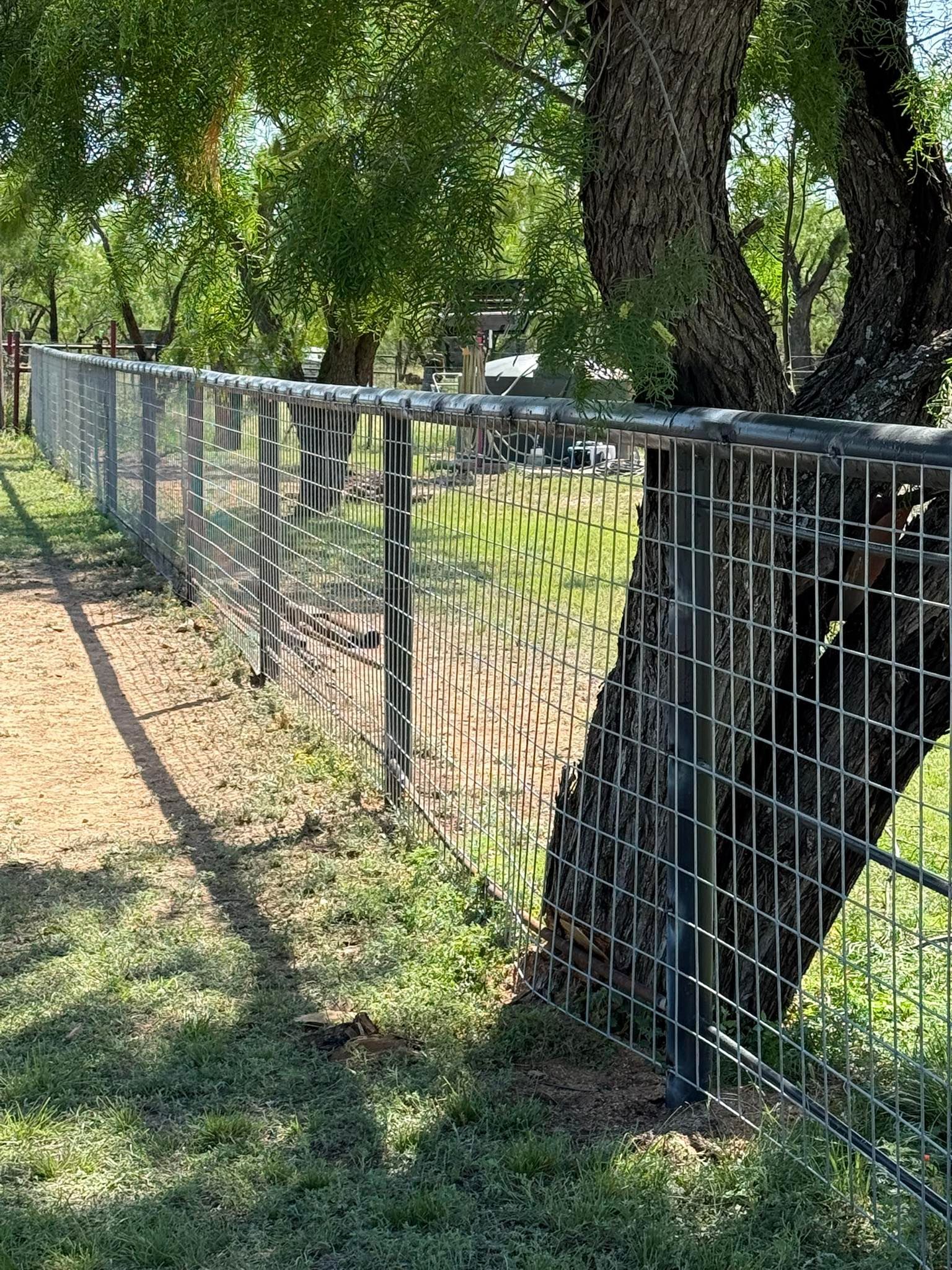
Fence posts lean when gate weight exceeds what the corner bracing can support, and wire sags when livestock lean into panels installed without proper tension. Bean Welding & Construction LLC installs custom fencing designed around the specific demands of your property—whether that means containing livestock with pipe fencing strong enough to resist animal pressure, marking boundaries with perimeter fencing that defines property lines clearly, or controlling access with entry gates that swing smoothly despite daily use. Fabrication capabilities allow the team to build custom metal gates and structural supports that hold alignment over years of opening cycles and wind load.
Fence installation starts with corner placement and line posts set to depth and spacing appropriate for the fence type and terrain. Pipe fencing uses heavier gauge materials and welded joints at stress points to handle livestock impact. Perimeter and entry fencing installations account for gate swing clearance, latch operation, and hinge reinforcement so daily use doesn't create sagging or misalignment within the first season.
Schedule a property assessment to review your fencing needs and discuss layout options for perimeter, livestock, or entry fence installation.
Why Proper Installation Prevents Early Failure
Fence installation involves setting posts to the correct depth for soil type and expected load, aligning them vertically so rails and wire maintain tension without pulling posts out of plumb, and bracing corners to resist lateral forces from gates and tensioned wire. Pipe fencing installations include welded joints at critical connections rather than relying solely on bolted assemblies that loosen under repeated stress. Custom fabrication work ensures gates are built square with reinforced corners so hinges don't tear out and latches engage cleanly every time.
After installation, your fence maintains its line without sagging between posts, gates swing without dragging on the ground, and corner posts remain plumb despite wind and animal pressure. Metal materials resist corrosion and UV degradation better than untreated wood, reducing the frequency of rail replacement and post repairs. Livestock containment fences hold animals within boundaries without requiring constant wire re-tensioning or post straightening after storms.
Fencing projects vary in scope depending on total linear footage, terrain complexity, gate quantity, and material selection. Agricultural fencing may include multiple gates for equipment access and livestock sorting. Commercial fencing often requires entry gates with locking mechanisms and perimeter fencing that establishes clear property boundaries for security and liability purposes.
Common Fence Installation Questions
Property owners planning fence installations want to understand material options, installation methods, and how different fencing types perform under Central West Texas conditions.
What's the difference between pipe fencing and wire perimeter fencing?
Pipe fencing uses heavier gauge steel tubing in horizontal rails, providing strength for livestock containment, while wire perimeter fencing uses tensioned wire between posts to define boundaries at lower material cost.
How deep do fence posts need to be set in Ballinger?
Post depth depends on soil type and fence height, but typical installations set posts at least one-third of their above-ground height into the soil, with concrete used in sandy or loose soils to prevent shifting.
What maintenance does metal fencing require over time?
Metal fencing requires periodic inspection of welds and joints, tightening of bolted connections, and touch-up of any coating damage to prevent rust, but avoids the rot and insect issues common with wood fencing.
How are custom gates fabricated for specific property needs?
Gates are welded from square tubing with diagonal bracing to prevent racking, sized to match opening width and clearance requirements, and fitted with hinges and latches positioned for the intended swing direction and lock type.
When should fencing be installed relative to other property work?
Fencing installation typically happens after site grading and major construction are complete to avoid damage from heavy equipment traffic, but before landscaping if the fence line will affect planting zones or irrigation routing.
Bean Welding & Construction LLC provides fence installation across Ballinger and surrounding rural areas for residential, agricultural, and commercial properties needing durable perimeter solutions. Contact the team to walk your property and discuss fencing layouts that meet your security and containment requirements.